Uncovering Our Story: Trinity Reflects on Almost 50 Years of the Uniting Church in Queensland
Church history is not only found in books and archives. Sometimes it is found in photographs, handwritten notes, banners, old voting papers, treasured albums, and the memories of people who have lived the story.
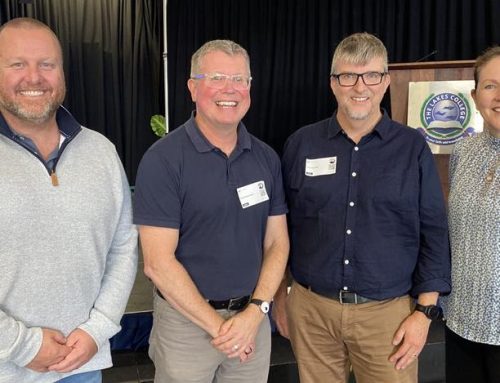
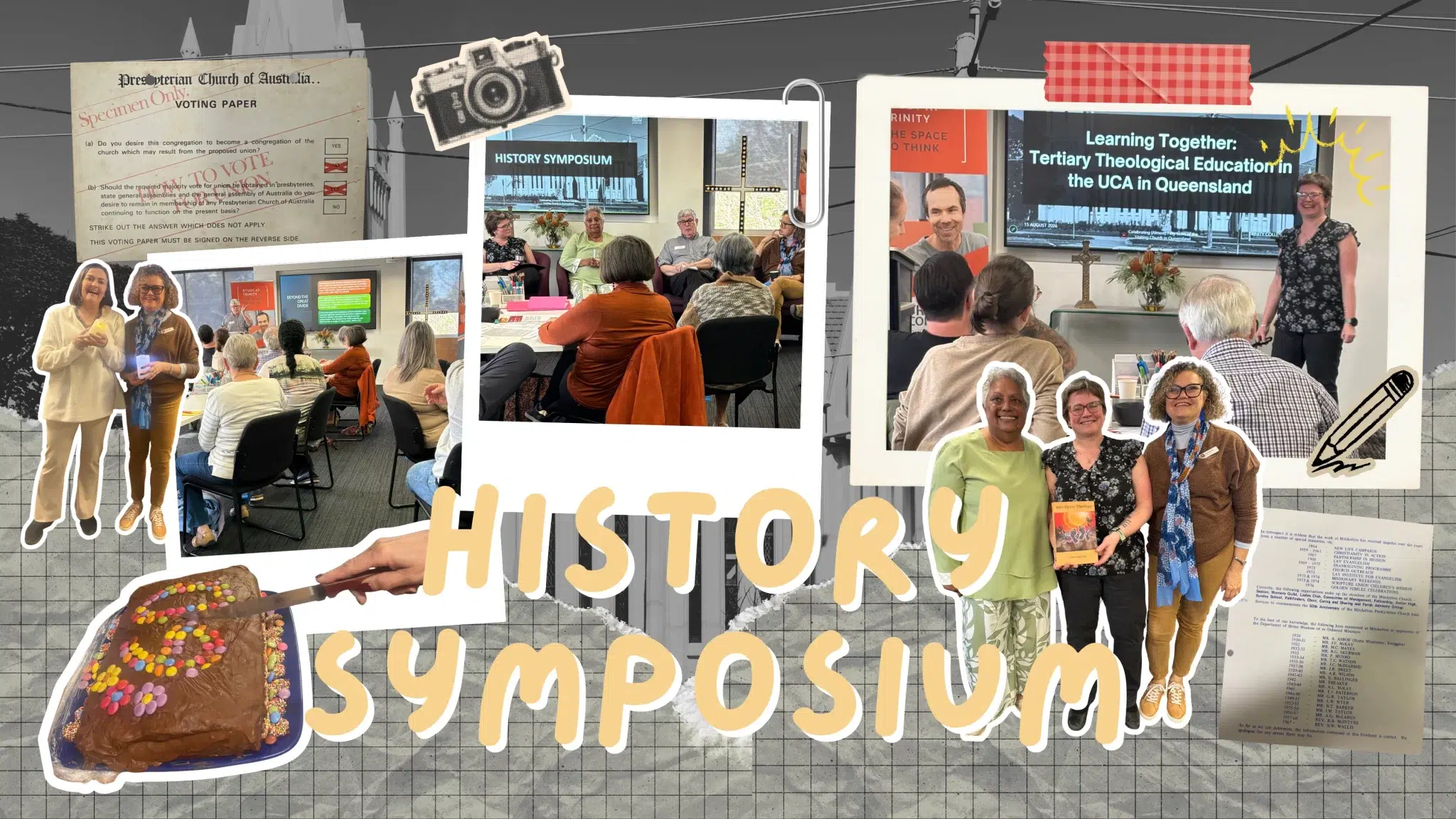
On Saturday, 15 August, Trinity College Queensland hosted a Church History Symposium celebrating (Almost) Fifty Years of the Uniting Church in Queensland. The day brought together students, ministers, lay people, scholars, and members of the wider church community to reflect on the history, character, and continuing story of the Uniting Church in Queensland.
The symposium formed part of Trinity’s History of Christianity in Australia unit, taught by Dr Rachel Krohn, lecturer in Old Testament and Hebrew. While connected to the unit, the event was opened to the public to encourage a wider conversation about the church’s past, present, and future.
For Rachel, who organised the symposium, the day was an opportunity for people both inside and outside the classroom to engage deeply with this important history.
“I hoped students and non-students would leave with a deepened understanding of the history and character of the Uniting Church,” Rachel said. “And I hoped that all attendees would see the value of the College as a place for open, hospitable, and robust theological conversation.”
History That Shapes Who We Are
As the Uniting Church approaches 50 years since union, the symposium invited participants not only to look back, but to ask how this history continues to shape the church today.
The day explored the history of the Uniting Church in Queensland, while also looking further back to the Methodist, Congregational, and Presbyterian traditions that preceded it.
For Rachel, this kind of historical reflection is about far more than remembering dates, names, and events. It is about recognising the faithfulness of God across generations, communities, challenges, and change.
“History is an integral part of our identity,” she said.
“Understanding the history of the Uniting Church in Queensland demonstrates God’s faithfulness to God’s church not only over the past 50 years, but in the histories of the Methodist, Congregationalist, and Presbyterian churches before us.”
The symposium also highlighted the stories of ordinary people whose faith led them to make an extraordinary difference.
“Hearing stories about ordinary people living out their faith in both ordinary and extraordinary ways is inspiring,” Rachel said. “Each of us is part of a much bigger story.”
Among the stories that stood out were accounts of ministers whose Christian convictions led them into political activism, even resulting in arrest. The day also explored the Church’s efforts to walk alongside and advocate with First Peoples — efforts that have at times been faithful and fruitful, and at other times fallen short.
These stories made space for both gratitude and honesty. They invited participants to celebrate the Church’s history while also reflecting on its complexities, responsibilities, and ongoing call to faithfulness.
A History You Can Hold in Your Hands
Alongside the presentations and discussions, the symposium featured a collection of artefacts and displays contributed by congregations across Queensland.
Trinity had invited congregations to share pieces of their own stories, and several responded by bringing picture albums, scrapbooks, banners, photographs, and other materials documenting significant people and moments from their congregational life.
Many of these collections had been created and preserved by local lay historians, whose careful work has helped ensure that important stories from individual congregations are not forgotten.
The displays were a reminder that church history is not found only in official records or academic texts. It also lives in photographs, handwritten notes, banners, albums, and objects that have been lovingly kept by generations of church communities.
One particular highlight was a collection of photographs documenting Trinity’s student body from 1993 to 2013.
For former students attending the symposium, the photographs offered a chance to remember their own time at Trinity, along with the lecturers, friends, and communities that helped shape them.
“It was a real highlight,” Rachel said, “as attendees remembered their time studying at Trinity, but also the lecturers and friends who helped form them.”
Learning Across Generations
One of Rachel’s highlights from the day came during the final session: a discussion forum hosted by Reverend David Baker, former Moderator of the Queensland Synod.
The panel brought together Kym Korbe, Executive Officer of the Uniting Aboriginal and Islander Christian Congress and Covenanting, Dr John Harrison, Dr Anne Pattel-Gray, and Rachel herself.
For Rachel, the panel reflected something of the beauty of the Uniting Church — people from different generations and cultural backgrounds coming together to listen, learn, reflect, and speak honestly with one another.
“The camaraderie between scholars from different generations and cultural backgrounds was beautiful,” she said. “And it was a demonstration of the ways in which Christ holds his diverse Body together.”
The conversation provided a fitting conclusion to a day centred on remembering the past while asking what that history means for the Church today.
Continuing the Conversation
While the symposium marked a significant moment in celebrating almost 50 years of the Uniting Church in Queensland, the stories shared throughout the day point toward an ongoing conversation.
The photographs, banners, scrapbooks, and artefacts contributed by congregations represent only a small portion of the stories held within Queensland’s churches. They are reminders of the people, communities, struggles, celebrations, and acts of faith that have shaped the Church over generations.
As Rachel reflected, each person and congregation is part of a much bigger story.
Preserving and sharing these stories helps future generations understand where the Church has come from, while creating space to consider where it may be called next.
At Trinity, the symposium brought history out of the archives and into conversation. It connected academic study with lived experience, creating a space where students, scholars, ministers, lay people, and the wider Church community could learn from one another.
The Story Continues
For those who could not attend the symposium, the conversation is not over.
The artefacts and displays shared by congregations will remain on display at Trinity College Queensland for one more week, giving members of the wider community an opportunity to explore these pieces of Queensland’s Uniting Church history for themselves.
The displays are open to the public Monday to Friday, 8:30am–5:00pm.
Come and discover the photographs, albums, banners, and other treasures that help bring these stories to life.